

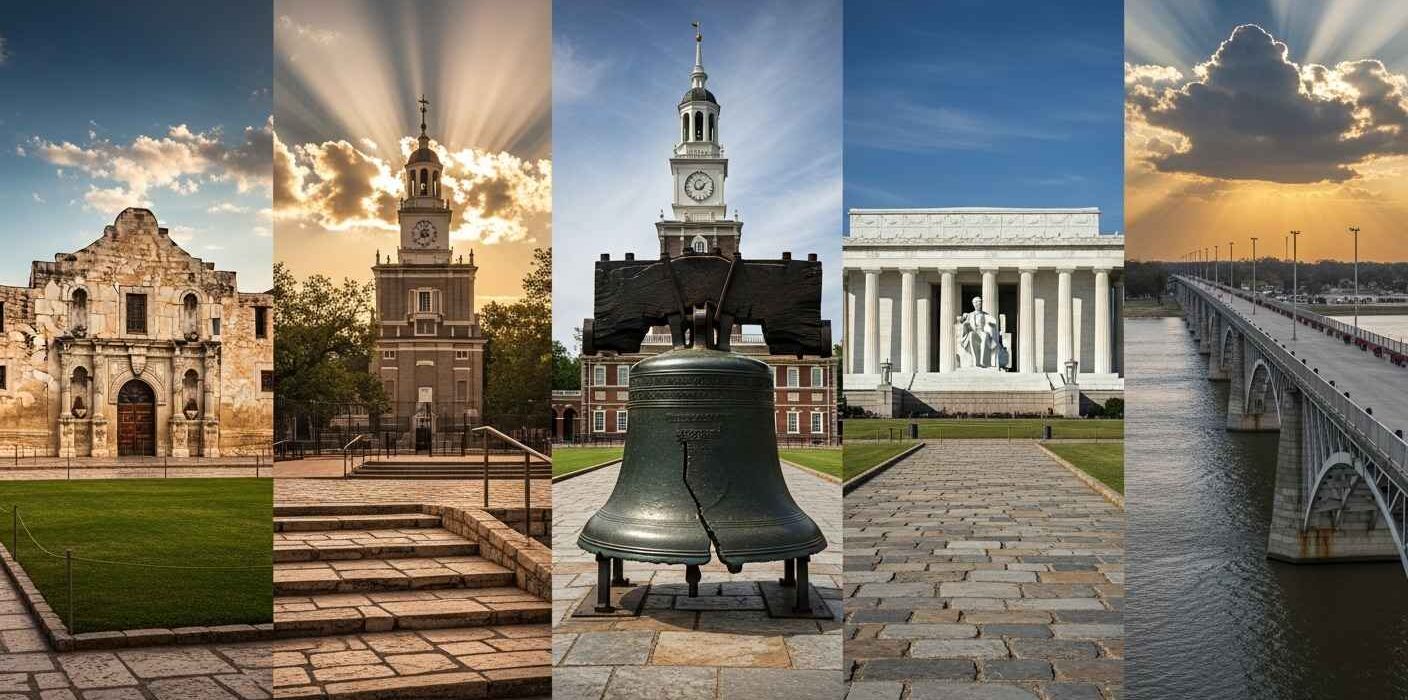
Every nation has landmarks that tell its story — the victories, struggles, and turning points that shaped its identity. In the United States, these places aren’t just tourist attractions; they are living classrooms where history speaks directly to those willing to listen.
From battlefields and memorials to homes and city streets, America’s historic sites reveal far more than dates and names in textbooks. They show us the courage, innovation, and resilience that built a nation — as well as the moments of conflict and challenge that continue to shape it today.
Let’s explore some of the most iconic historic places that tell America’s true story.
1. Independence Hall – The Birthplace of a Nation
Located in Philadelphia, Pennsylvania, Independence Hall is where the Founding Fathers signed the Declaration of Independence in 1776 and debated the U.S. Constitution in 1787.
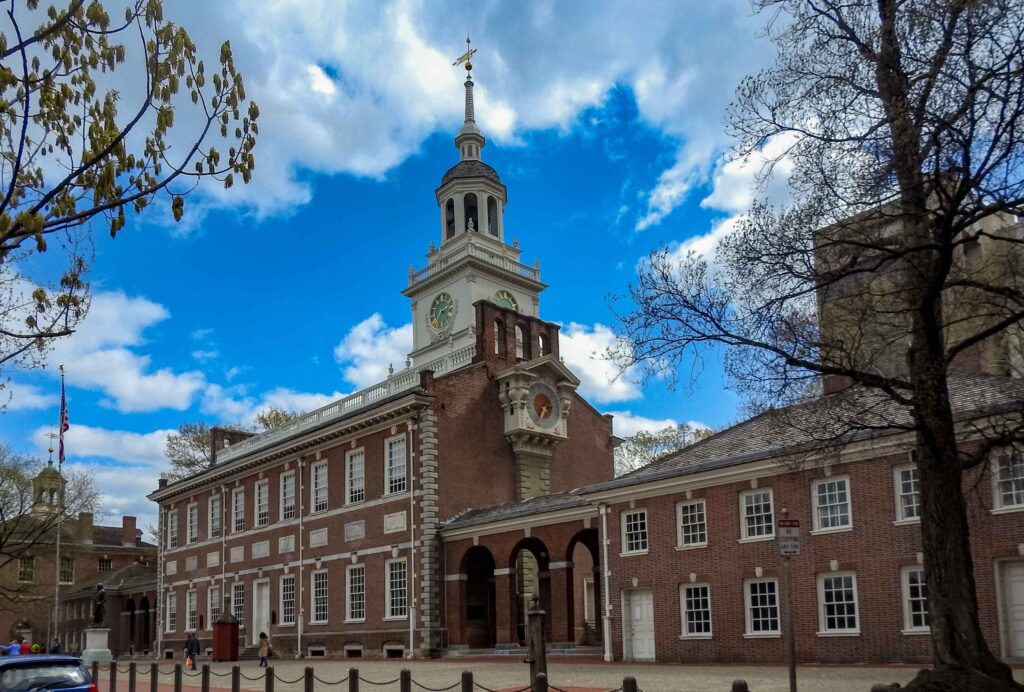
Standing inside the Assembly Room, visitors can imagine the heated discussions that shaped the nation’s founding principles — liberty, democracy, and self-governance. Independence Hall reminds us that America’s birth was not just an event, but a radical experiment in freedom.
2. Gettysburg National Military Park – The Turning Point
Few places bring the Civil War to life like Gettysburg, Pennsylvania. The three-day battle fought here in July 1863 was the bloodiest of the war and marked a turning point for the Union.
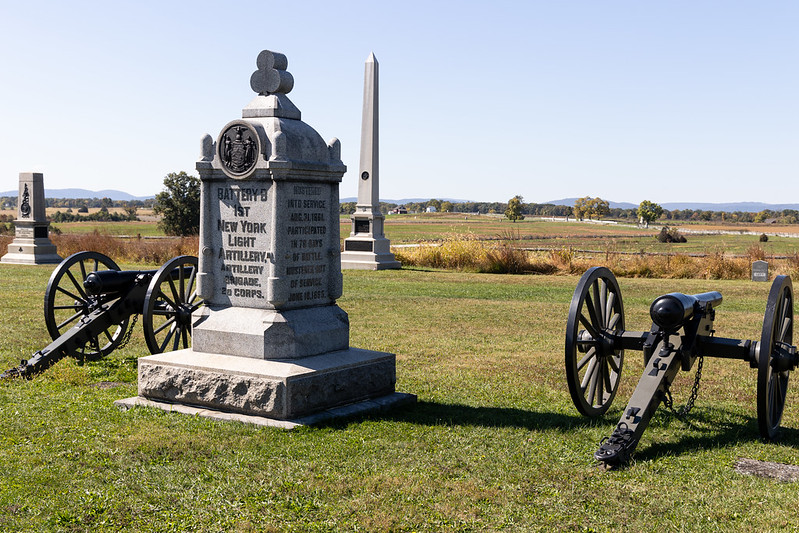
Walking across the fields where soldiers fought and died, visitors can feel the weight of sacrifice and hear echoes of President Lincoln’s Gettysburg Address, which redefined the war as a fight not just to preserve the Union, but to guarantee freedom for all.
3. Ellis Island & The Statue of Liberty – The Immigrant Experience
For millions of immigrants, Ellis Island was their first step into America. Between 1892 and 1954, more than 12 million people passed through its doors seeking a better life.
The nearby Statue of Liberty, a gift from France, became a symbol of hope and opportunity. Together, these landmarks tell the story of immigration — the hardships, dreams, and diversity that shaped the American identity.
4. Montgomery’s Civil Rights Landmarks – A Fight for Equality
Montgomery, Alabama, holds some of the most important sites of the Civil Rights Movement. The Rosa Parks Museum honors the woman whose simple act of defiance sparked the Montgomery Bus Boycott. The Dexter Avenue King Memorial Baptist Church, where Dr. Martin Luther King Jr. preached, stands as a beacon of courage and leadership.
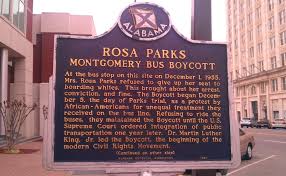
These places remind us that America’s story is still being written — that progress is made when ordinary people demand justice and equality.
5. The National Mall – A Stage for Change
Located in Washington, D.C., the National Mall is often called “America’s Front Yard.” It is home to the Lincoln Memorial, Washington Monument, and numerous war memorials.
But beyond its statues and reflecting pools, the Mall has been the site of some of the most powerful demonstrations in U.S. history — from the 1963 March on Washington to modern protests calling for equality and reform. It represents the right of Americans to speak, gather, and call for change.
6. Mesa Verde National Park – Ancient American History
Long before Europeans arrived, North America was home to advanced civilizations. Mesa Verde, in Colorado, preserves the cliff dwellings of the Ancestral Puebloans, who lived there more than 700 years ago.
Exploring these structures helps us understand that America’s story didn’t begin with colonization — it began with Indigenous peoples who built thriving communities, farmed, traded, and left a lasting cultural legacy.
7. Pearl Harbor – A Day That Changed the World
On December 7, 1941, a surprise attack on Pearl Harbor, Hawaii, drew the United States into World War II. Today, the USS Arizona Memorial rests above the sunken battleship where more than 1,100 sailors lost their lives.
Visiting this site is a powerful reminder of the cost of war and the resilience of a nation that rallied to defend freedom on a global scale.
8. Mount Vernon – The First President’s Home
George Washington’s Mount Vernon estate in Virginia offers an intimate look at the life of America’s first president. Beyond the stately mansion, the site includes slave quarters, gardens, and Washington’s final resting place.
It presents a balanced view of Washington’s leadership and legacy, including the contradictions of a man who fought for liberty while enslaving others — encouraging visitors to grapple with the complexities of American history.
9. Route 66 – The Road That Built a Nation
Known as the “Main Street of America,” Route 66 connected Chicago to Santa Monica and became a symbol of freedom, mobility, and opportunity during the 20th century.
It tells the story of America’s growth — from Dust Bowl migrations to the rise of car culture and roadside diners. Driving Route 66 is like flipping through a living photo album of mid-century America.
10. The 9/11 Memorial & Museum – A Story of Resilience
In New York City, the 9/11 Memorial & Museum honors the nearly 3,000 lives lost during the September 11, 2001 terrorist attacks. The reflecting pools, set in the footprints of the Twin Towers, create a place for reflection, remembrance, and healing.
It reminds us that tragedy does not define a nation — how we respond does. The stories of first responders, survivors, and ordinary citizens show the strength and unity that arose from the darkest day in modern U.S. history.
Why These Places Matter
Historic places are not just backdrops for selfies — they are living reminders of who we are, where we’ve been, and where we are headed. They teach lessons of courage, innovation, and perseverance.
Visiting these sites allows us to engage with history in a tangible way, reminding us that the American story is complex, diverse, and ever-evolving.
Conclusion: A Journey Worth Taking
The true story of America cannot be told in a single monument or museum — it’s written across thousands of places, from small towns to major cities. Whether you stand in Independence Hall, walk across the Edmund Pettus Bridge, or gaze out at the Grand Canyon, you’re connecting with a piece of the nation’s collective memory.
By visiting and preserving these sites, we honor the past while inspiring future generations to keep building a better America.