

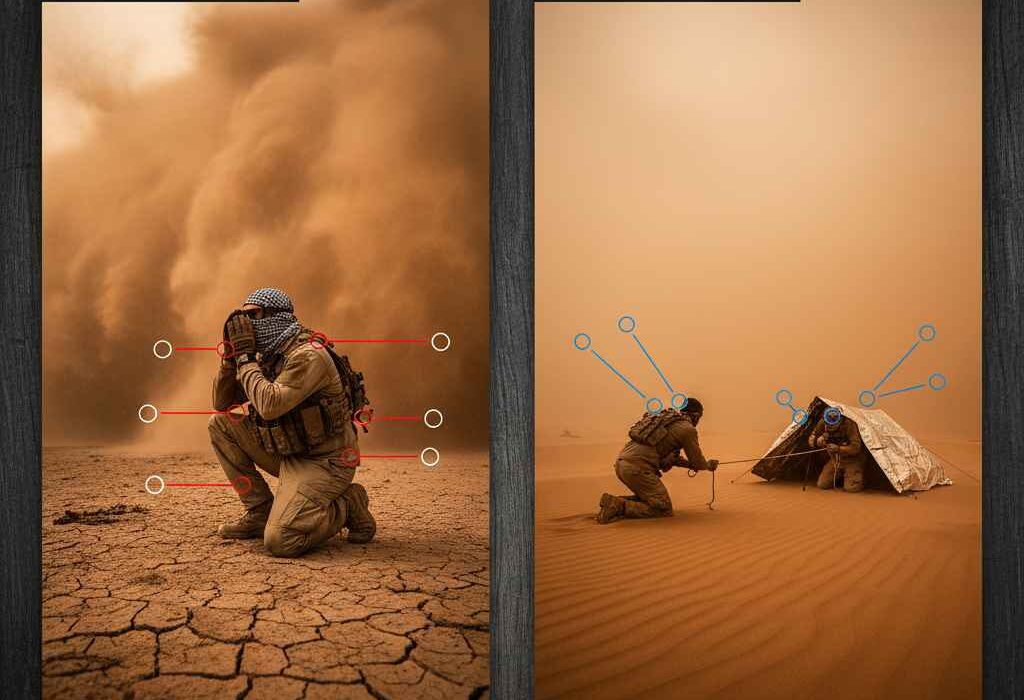
🌍 The Dangers of Sandstorms
Sandstorms are one of the most disorienting hazards in arid and desert environments. Sudden gusts can reduce visibility to just a few meters, fill your lungs with dust, and strip your skin of moisture. For anyone caught unprepared, sandstorms can cause injury, dehydration, and even death. Survival here isn’t just about endurance—it’s about preparation, shelter, and smart movement.
🛡️ Immediate Actions When Caught in a Sandstorm
- Stop and Find Shelter:
- Avoid running blindly. Low visibility can cause collisions with rocks, cliffs, or desert hazards.
- Look for natural windbreaks such as rock formations, dunes, or depressions in the ground.
- Protect Your Airways:
- Cover your nose and mouth with a scarf, shirt, or cloth.
- If possible, wet the cloth slightly—it helps filter dust and sand particles.
- Use goggles or wrap-around glasses to protect your eyes from abrasions.
- Lower Your Profile:
- Crouch or lie down to avoid the full force of wind-driven sand.
- If you’re in open desert, try to move into a small dip or behind rocks.
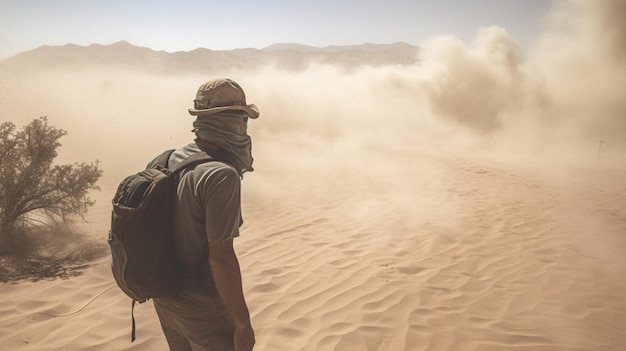
🌪️ Navigation During Zero Visibility
When the storm is intense, traveling can be dangerous. If you must move:
- Use a Compass or GPS: Relying on the naked eye can lead you in circles.
- Follow a Fixed Landmark: If visible, use hills, dunes, or distant rocks as a reference.
- Leave Markers: Drop stones or scratch lines in the sand to track your path.
Pro Tip: Travel only if you have a clear destination nearby. Otherwise, it’s safer to wait for the storm to pass.
🏕️ Building Emergency Shelter
A sandstorm can last minutes to hours, so temporary shelters are essential:
- Dig a Shallow Trench: Lie in the depression to avoid the brunt of the wind.
- Use Natural Features: Rocks, dunes, or vegetation can serve as partial barriers.
- Cover Yourself: Use tarps, clothing, or any available materials to shield from flying sand.
Tip: Keep your skin covered to prevent abrasion and dehydration.
💧 Staying Hydrated and Safe
Sandstorms accelerate dehydration because wind strips moisture from your body:
- Drink water frequently, even if you don’t feel thirsty.
- Cover your skin to reduce sweat evaporation.
- Protect your lips and eyes with cloth or goggles to minimize irritation.
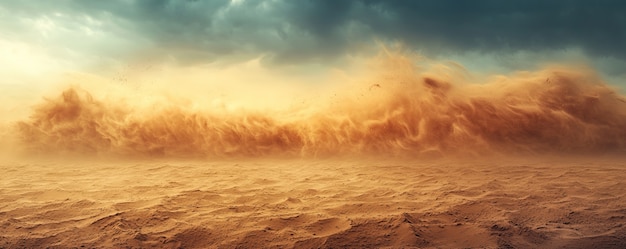
🧠 Mental Survival Strategies
Sandstorms are disorienting and stressful. Staying calm is as important as physical protection:
- Focus on short-term goals: protect your airways, stay low, find cover.
- Avoid panic—moving too fast increases the risk of injury.
- Keep track of time and landmarks to avoid getting lost once visibility returns.
⚠️ After the Storm
Once the sandstorm passes:
- Check yourself and companions for injuries, sand in eyes, or abrasions.
- Rehydrate and rest before moving.
- Assess your environment carefully before continuing travel.
🔑 Final Thought
Sandstorms are extreme tests of survival skills. They demand protection, patience, and awareness. With proper preparation, you can minimize the dangers of zero visibility and emerge safe on the other side.
👉 In deserts and plains, the storm may blind you, but your knowledge is your guiding light.