

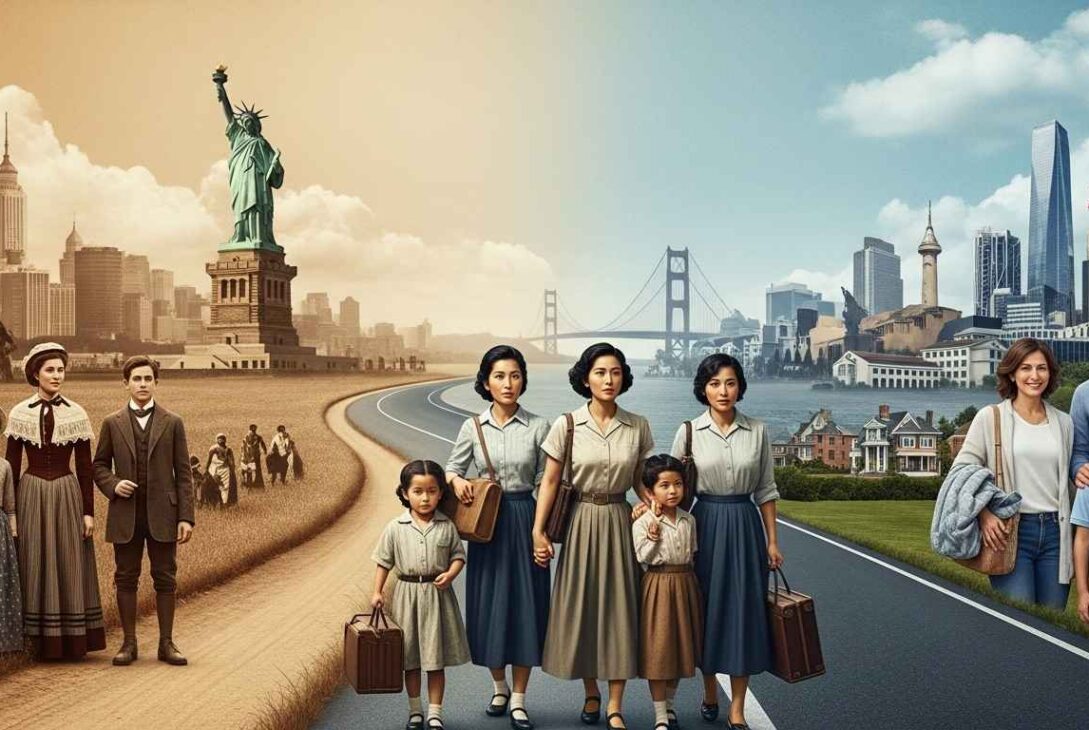
Immigration has been one of the most influential forces in shaping the United States. From the earliest settlers arriving on the East Coast to waves of immigrants from around the world, the diversity and dynamism of the American population have continuously redefined the nation’s culture, economy, and identity. Understanding the impact of immigration helps us appreciate the richness of American society today and the struggles and triumphs that have defined its history.
The Early Waves of Immigration
America’s story begins with settlers from Europe, primarily England, who arrived in the 17th century seeking religious freedom, land, and opportunity. These early settlers laid the foundations for American towns, governance, and social structures.
In the 19th century, large waves of Irish and German immigrants arrived, driven by famine, political upheaval, and economic hardship in Europe. The Irish, fleeing the Great Famine of the 1840s, played a critical role in building infrastructure such as canals, roads, and railways. German immigrants brought skills in brewing, farming, and craftsmanship, contributing significantly to the nation’s economy and cultural landscape.
Economic Contributions
Immigrants have historically fueled the U.S. economy. In the late 19th and early 20th centuries, millions of European immigrants settled in industrial cities such as New York, Chicago, and Boston. They worked in factories, shipyards, and construction, helping the United States become an industrial powerhouse.
Beyond labor, immigrants introduced entrepreneurial spirit, establishing businesses that continue to thrive today. From small corner shops to large enterprises, immigrants have been vital in generating jobs, innovation, and economic growth. Even today, immigrant-owned businesses represent a significant portion of the U.S. economy, reinforcing the ongoing connection between immigration and economic vitality.
Cultural Enrichment
Immigration has profoundly shaped American culture. Each wave of newcomers brought its own languages, traditions, foods, music, and festivals, which merged into the diverse cultural tapestry of the United States.

- Cuisine: Italian pasta, Mexican tacos, Chinese dim sum, and countless other foods became staples of the American diet.
- Music and Arts: Jazz, blues, and hip-hop reflect the influences of African American immigrants and communities, while European and Latin American immigrants introduced classical music, dance, and visual arts.
- Holidays and Traditions: Celebrations like St. Patrick’s Day, Cinco de Mayo, and Lunar New Year highlight the cultural diversity that immigrants bring to communities across the country.
This blending of traditions fosters creativity and innovation, turning America into a global cultural hub.
Social and Political Influence
Immigration has also shaped American politics and society. Immigrant communities have often been at the forefront of social reform, advocating for labor rights, education, and civil liberties.
- Labor Movements: Immigrant workers in factories and mines organized strikes and unions to demand better wages and working conditions, contributing to labor protections still in place today.
- Civil Rights: Immigrant groups have historically supported social justice initiatives, adding momentum to broader civil rights movements.
- Political Participation: Over time, immigrants and their descendants have entered politics, serving as legislators, mayors, and even national leaders, influencing policies that reflect a broader diversity of experiences and perspectives.
Through civic engagement, immigrants help ensure that American democracy continues to evolve in a way that represents all residents.
Overcoming Challenges
While immigration has enriched the United States, it has not been without challenges. Immigrants often faced discrimination, xenophobia, and exclusionary laws. Anti-immigrant sentiments in the late 19th and early 20th centuries led to restrictive legislation, such as the Chinese Exclusion Act of 1882.
Despite these obstacles, immigrant communities persevered, forming support networks, cultural organizations, and advocacy groups that strengthened their resilience and helped integrate them into American society. These stories of perseverance are central to understanding how immigrants have continually shaped the nation while maintaining their unique identities.
Modern Immigration and American Society
Today, immigration continues to transform the U.S. With newcomers arriving from Latin America, Asia, Africa, and the Middle East, America remains a mosaic of cultures, ideas, and traditions. Modern immigrants contribute to technology, healthcare, education, and entrepreneurship, demonstrating that the role of immigrants is as vital today as it was in the past.
Moreover, contemporary immigrants are enriching American society by promoting global awareness, cross-cultural understanding, and innovation in an increasingly interconnected world. Their experiences highlight the ongoing importance of diversity in fostering economic growth, cultural enrichment, and social progress.
Conclusion
Immigration has been—and continues to be—a cornerstone of American society. Through hard work, cultural contributions, civic engagement, and resilience, immigrants have shaped every aspect of life in the United States. From the economy and labor movements to cuisine, music, and politics, the influence of immigration is woven into the nation’s very fabric.
Recognizing this history helps us understand the United States as a dynamic, ever-evolving nation built on the strength and diversity of its people. Immigration is not merely a demographic phenomenon—it is a driving force behind the innovation, culture, and resilience that define America.