


What if the world as you know it changed overnight?
No phones buzzing. No grocery stores stocked. No security of law and order.
That chilling possibility is exactly what the book Escaping Anarchy dares to confront. But it doesn’t just dwell on fear—it offers a roadmap. A way out. A guide to surviving when the thin veil of civilization tears apart.
In this article, we’ll explore the lessons and insights hidden in this gripping book, while uncovering why its message feels more urgent than ever.
When Society Collapses: Why the Book Hits Home
History proves that anarchy isn’t fiction—it’s a repeating pattern. Think of:
- The fall of ancient Rome.
- The 2008 financial meltdown that shook global stability.
- Natural disasters like Hurricane Katrina, where entire cities spiraled into chaos within hours.
The uncomfortable truth? We’re never as secure as we think. Modern comforts lull us into believing “it could never happen here.” Yet, Escaping Anarchy reminds us that every empire eventually faces its breaking point.
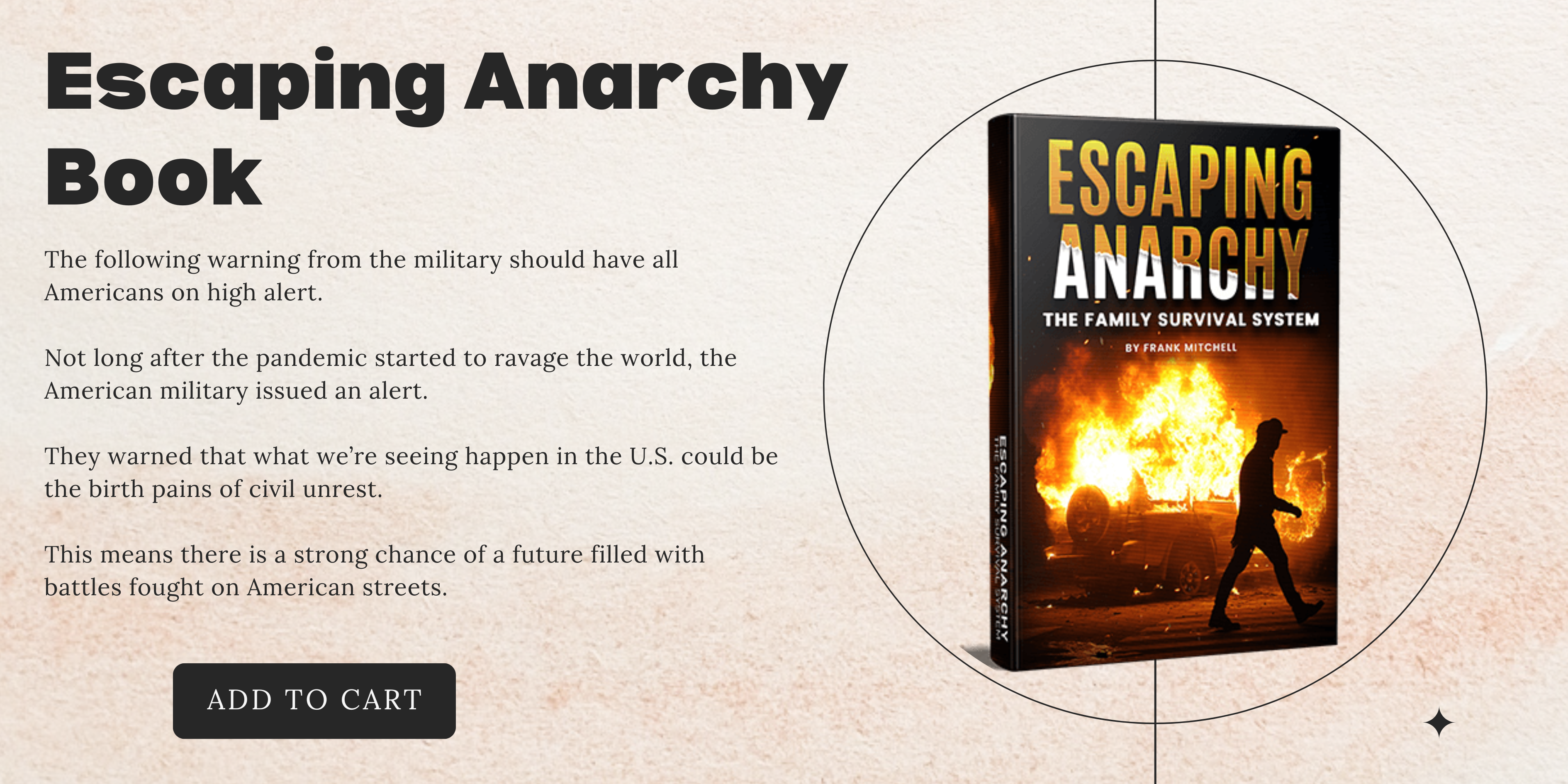
The book doesn’t preach doom. Instead, it strips away illusions and asks the hardest question of all: Are you ready when the lights go out?
The Psychology of Chaos: Why People Turn on Each Other
One of the most captivating sections of the book digs deep into human behavior during crisis. Studies show that during disasters, survival instincts often override morality.
- Neighbors can become competitors overnight.
- Trust can dissolve into suspicion.
- Crowds can turn violent when resources run dry.
“Escaping Anarchy” doesn’t sugarcoat this reality. It forces readers to see that preparing isn’t about paranoia—it’s about protecting loved ones when order crumbles.
And here’s the twist: the book highlights that survival is not just about stockpiling food or weapons. It’s about mindset—discipline, calm under pressure, and the ability to adapt.
Lessons from the Book: The Four Pillars of Survival
So, what does the book actually teach? The narrative weaves gripping stories with practical strategies, breaking survival into four main pillars:
1. Preparedness Over Panic
The unprepared scramble when disaster strikes. The prepared adapt. The book stresses building habits now—like storing essentials, learning first aid, and strengthening your mental resilience—so panic never dictates your choices.
2. Self-Reliance is Freedom
The author argues that true safety comes when you’re not fully dependent on fragile systems—be it food supply chains or digital banking. Simple skills like gardening, purifying water, or repairing tools suddenly become priceless.
3. Community as a Lifeline
Ironically, while chaos can breed division, survival often depends on strong alliances. The book highlights how small, trusted groups can outlast isolated individuals. In an anarchic world, connection equals security.
4. Mobility and Escape
Sometimes survival isn’t about standing ground—it’s about moving fast and smart. “Escaping Anarchy” walks readers through how to evaluate threats, pack essentials, and relocate before danger closes in.
Why This Book Stands Out in the Survival Genre
Plenty of survival manuals exist, but most drown readers in lists of gear and technical jargon. Escaping Anarchy does something different—it’s a story-driven wake-up call.
Instead of telling you what to do, it shows you why you must act. Through vivid scenarios and historical examples, it makes you imagine yourself in those dire moments. That emotional spark is what turns pages into preparation.
And from an SEO perspective, this is what makes the book so compelling for today’s readers: it blends practical survival skills with emotional storytelling, bridging logic and heart.
The Silent Message: Hope in the Midst of Chaos
Despite its heavy theme, “Escaping Anarchy” isn’t about despair. Beneath the warnings lies a hopeful truth: preparedness gives peace of mind.
Knowing you have a plan means fear no longer controls you. You can face uncertainty with steady hands and a clear head.
And isn’t that what we’re all chasing in life—not control over the future, but the courage to face it?
Final Takeaway: Don’t Just Read—Act
Reading “Escaping Anarchy” is like looking in a mirror. It shows you not just the fragility of society, but also your own blind spots.
The actionable takeaway? Start small, start today.
- Set aside a week’s worth of clean water and food.
- Learn one survival skill each month.
- Build trust with neighbors who share your mindset.
Preparedness isn’t about living in fear—it’s about living with confidence. And that’s the true gift of “Escaping Anarchy.”
So the next time the world trembles—whether from financial collapse, political unrest, or natural disaster—you won’t be left scrambling. You’ll already be moving forward.
✨ Bottom line: The world may be unpredictable, but your survival doesn’t have to be left to chance. “Escaping Anarchy” is more than a book—it’s a blueprint for resilience.