
In survival situations, sleep can be the most dangerous time. While your body recharges, predators — human or animal — may see you as vulnerable. A well-planned defensive camp ensures you rest safely, preserves energy, and keeps risks minimal.
Choosing the Right Location
The first step is picking a strategic campsite:
- Elevated or hidden spots: High ground improves visibility; thick bushes or trees offer concealment.
- Away from obvious trails: Avoid main paths where animals or people pass.
- Water access: Ensure a nearby source, but don’t camp right at the edge — predators often patrol water.
- Natural barriers: Rocks, cliffs, or dense vegetation provide protection and limit approach angles.
Setting Up a Defensive Perimeter
Once a location is chosen, establish a basic perimeter:
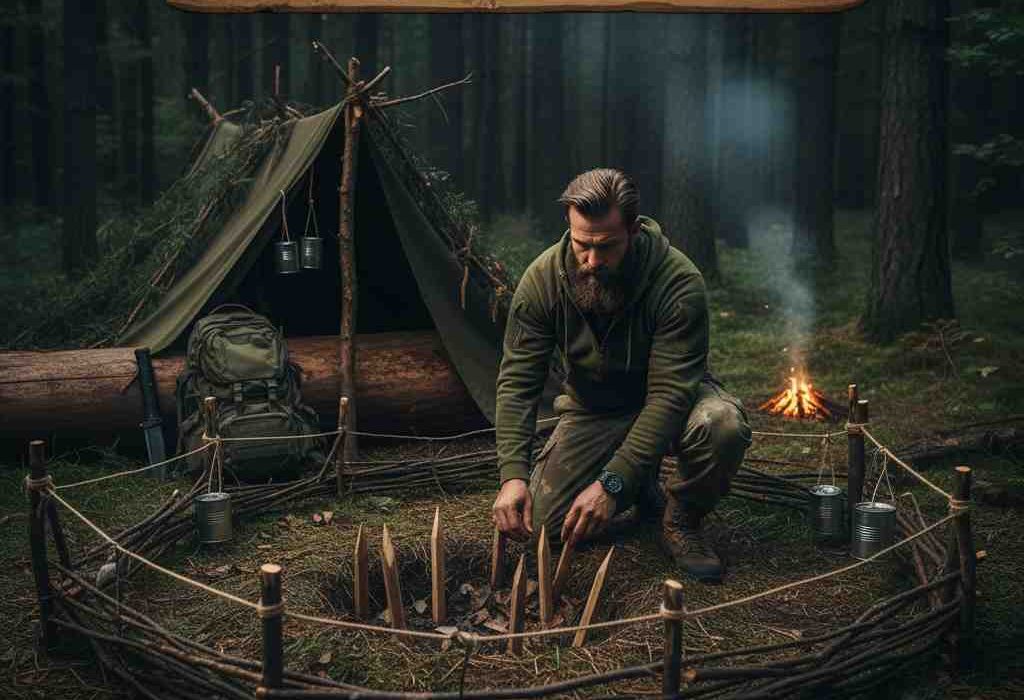
- Noise-making traps: Simple lines of twigs or cans can alert you if someone or something approaches.
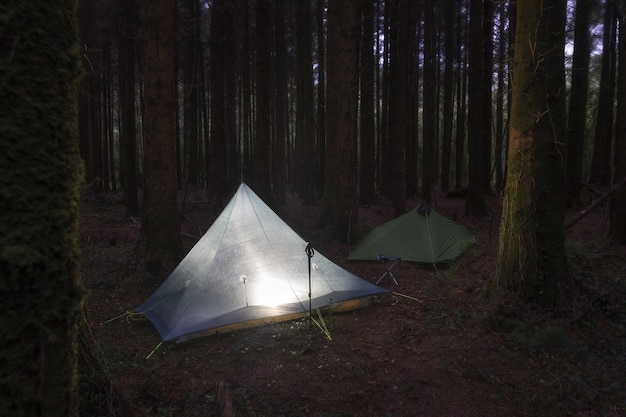
- Visual barriers: Branches, brush, or tarps can break up your silhouette, making it harder to spot.
- Trip hazards: Rocks, roots, or sticks around the perimeter can slow intruders or alert you.
Shelter Considerations
The type of shelter can enhance safety:
- Debris huts or lean-tos: Concealment is key; thick layers of leaves or branches can hide you while keeping insulation.
- Elevated shelters: If possible, building slightly off the ground helps avoid small predators.
- Camouflage: Use natural materials to blend the shelter into surroundings — color, texture, and shadow matter.
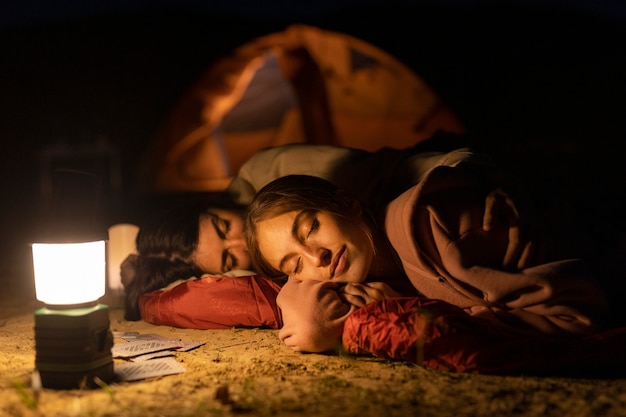
Inside the Camp
Even inside your shelter, you can increase safety:
- Keep tools and weapons close: Knives, sticks, or makeshift weapons should be within reach.
- Organize supplies: Food, water, and fire-starting materials stored securely prevent attracting wildlife.
- Sleeping arrangements: Position yourself so you have a clear line of sight toward likely approach directions.
Nighttime Vigilance
- Rotate watch duties if in a group — one person alert while others rest.
- Avoid bright fires unless necessary; smoke or light reveals your location.
- Use natural sounds and wind direction to monitor approaching threats.
Final Word
A defensive camp is about planning, awareness, and improvisation. By selecting a hidden, strategic site, setting up a perimeter, and organizing your shelter wisely, you drastically reduce risk while sleeping. In survival, safety while resting isn’t optional — it’s essential. A smartly arranged camp can mean the difference between a safe night and a dangerous one.