

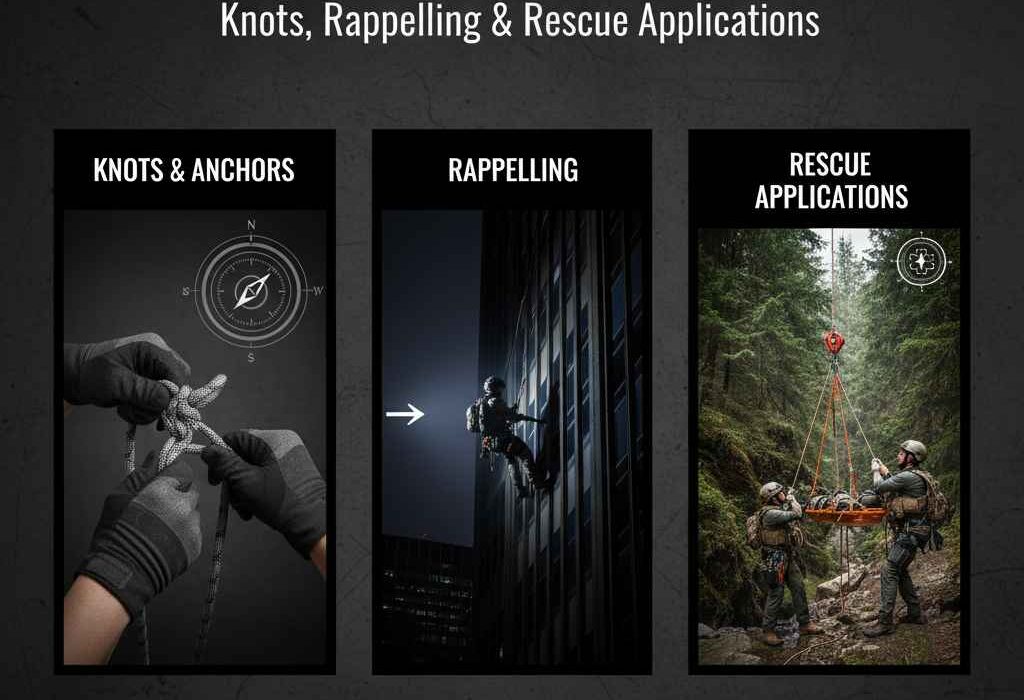
Rope is one of the most versatile tools in tactical operations, survival missions, and emergency scenarios. Whether you’re climbing, securing gear, or conducting a rescue, tactical rope skills are essential for safety and efficiency. Understanding knots, rappelling techniques, and rescue applications can make a critical difference when every second counts.
Why Rope Skills Matter
Rope isn’t just for climbing—it’s a multipurpose tool that can help you:
- Move safely in vertical or rugged terrain.
- Secure gear or create improvised shelters.
- Evacuate or rescue injured team members.
- Build improvised barriers, trip lines, or traps in survival situations.
Without proper rope skills, even the best equipment can fail or become dangerous.
Essential Knots for Tactical Applications

Mastering a few key knots is critical for tactical efficiency. Here are the most important:
1. Figure-Eight Knot
- Commonly used in climbing and rappelling.
- Forms a strong loop that won’t slip under load.
- Ideal for tying into a harness or securing anchors.
2. Bowline Knot
- Creates a fixed loop that’s easy to tie and untie.
- Useful for rescue situations and securing equipment.
3. Clove Hitch
- Quick to tie around poles, posts, or anchors.
- Adjustable under tension, perfect for temporary setups.
4. Prusik Knot
- A friction knot used for ascending ropes or creating backup safety lines.
- Common in rescues and climbing scenarios.
5. Double Fisherman’s Knot
- Joins two ropes together securely.
- Essential when you need longer lengths or backup lines.
Rappelling Techniques
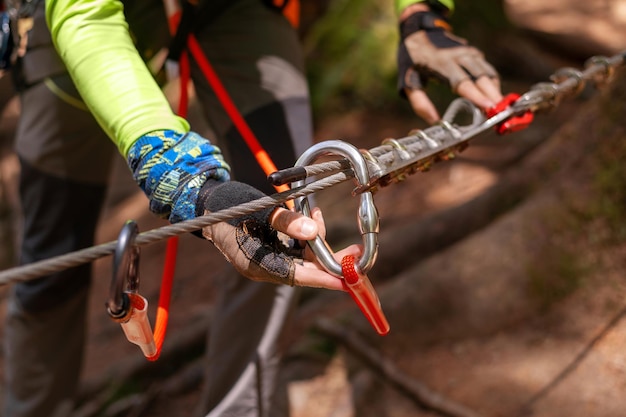
Rappelling allows tactical operators to descend vertical surfaces safely. Key points to remember:
- Anchor Setup: Always secure ropes to strong, reliable anchors. Check for stability before descent.
- Harness Use: Properly fit a harness and double-check all carabiners and connections.
- Controlled Descent: Use your braking hand to control speed. Avoid rushing—precision is safer than speed.
- Backup Systems: Whenever possible, use a secondary rope or prusik knot as a fail-safe.
Practicing rappelling on varied terrain (rock, urban structures, trees) builds confidence and muscle memory for real-world scenarios.
Rope Applications in Rescue
Rope isn’t just for movement—it’s critical in rescue operations:
- Evacuation Lines: Move injured or unconscious teammates safely.
- Hauling Gear: Lift supplies or tools across obstacles.
- Improvised Stretchers: Secure a victim to a rope or harness for safe transport.
- Emergency Shelter: Use ropes to rig tarps or tents in survival conditions.
Understanding tension, load limits, and safety protocols is crucial—overloading a rope or using improper knots can endanger lives.
Safety Tips for Tactical Rope Use
- Inspect ropes for frays, cuts, or wear before every use.
- Use ropes rated for your weight and load requirements.
- Practice knots and rappelling techniques regularly.
- Never improvise with damaged gear during a mission.
- Always communicate with your team when rigging ropes in tactical scenarios.
Final Thoughts
Rope is a simple yet indispensable tool in tactical operations, survival situations, and emergency rescues. Mastering knots, rappelling, and rescue applications enhances your capability, safety, and confidence in high-stress environments. For preppers, tactical operators, and outdoor enthusiasts, strong rope skills are not optional—they’re essential.
A rope in skilled hands is more than cordage—it’s a lifeline, a tool, and sometimes the difference between mission success and failure.